
The Fixed-Geometry Turbocharger
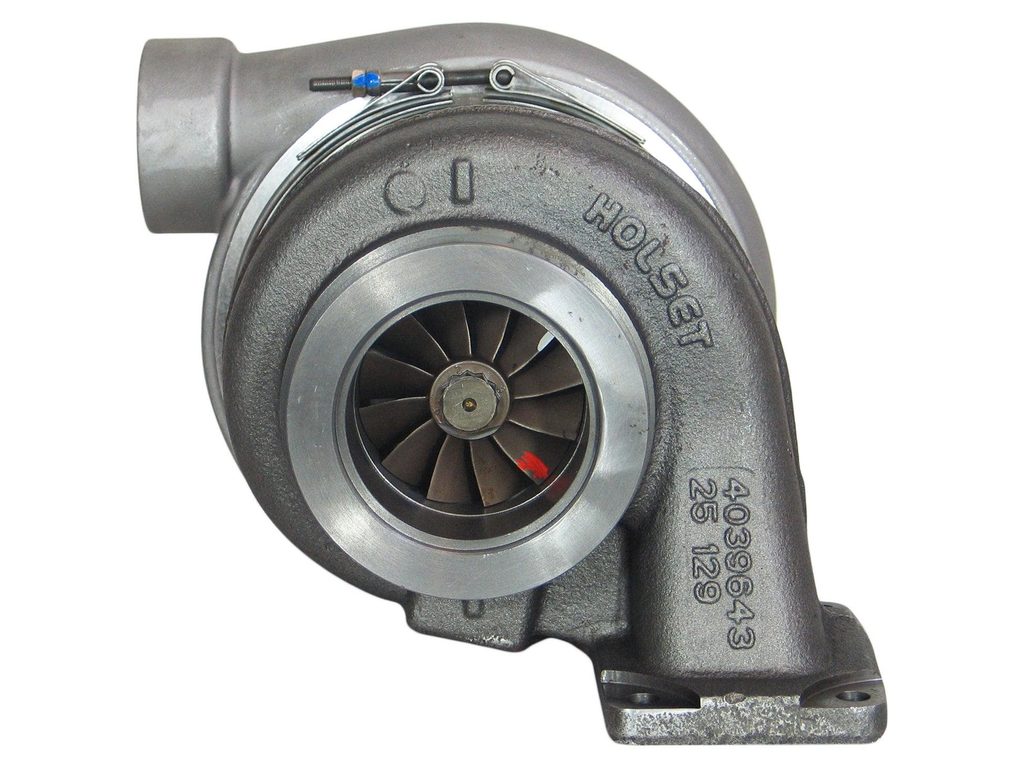
Let’s start with the simplest type of turbocharger: the fixed-geometry turbocharger.
A turbocharger has two wheels connected to each other by a shaft:
- The turbine wheel sits in the exhaust side.
- The compressor wheel sits in the intake side.
The exhaust gases leaving the engine are hot and moving quickly. Instead of simply sending all that energy out through the exhaust pipe, we can use some of that energy to drive the turbocharger.
The exhaust gases enter the turbine housing and spin the turbine wheel.
The turbine wheel is connected to the compressor wheel by a shaft, so when the turbine spins, the compressor spins too.
The compressor then draws air in through the air filter, compresses it, and sends it towards the engine.
So, in its simplest form:
Exhaust energy → Turbine → Shaft → Compressor → More air into the engine
That’s the basic principle behind every turbocharger.
So Why Is It Called “Fixed Geometry”?
Inside a fixed-geometry turbocharger, the shape and position of the passages directing the exhaust gas onto the turbine are fixed. There are no moving vanes controlling the exhaust flow.
This creates an issue of compromise in turbocharger design.
If we make the turbo large, it can move a lot more air at high engine speeds.
But the larger turbine takes more exhaust energy to accelerate. At low engine speeds, there may not be enough exhaust energy available to spin the turbine quickly.
This can result in turbo lag, the delay between the driver demanding more power and the turbocharger building enough speed to provide the additional air the engine needs.
You press the accelerator, more fuel is requested, but the turbo hasn’t caught up yet. As exhaust energy increases, the turbine accelerates, the compressor spins faster, and boost begins to build.
This is one of the reasons a large fixed-geometry turbo can feel less responsive at low engine speeds.
If we make the turbo smaller, it can respond quickly because the smaller turbine requires less exhaust energy to accelerate. But that smaller turbo may not be capable of flowing enough air at high engine speeds and high loads.
Turbocharger designers therefore have to answer the question:
Do we want a turbo that responds quickly at low speed, or one that can move lots of air at high speed?
With a fixed-geometry turbo, you can’t easily have both.
And this is where things get interesting, because someone eventually came up with the idea:
“What if we could change the way the exhaust gas enters the turbine?”
And that is essentially where the Variable Geometry Turbocharger comes into the story.
But before VGT’s, let’s take a detailed look at the problem with Fixed-Geometry Turbos.