
VGT – Variable Geometry Turbocharger
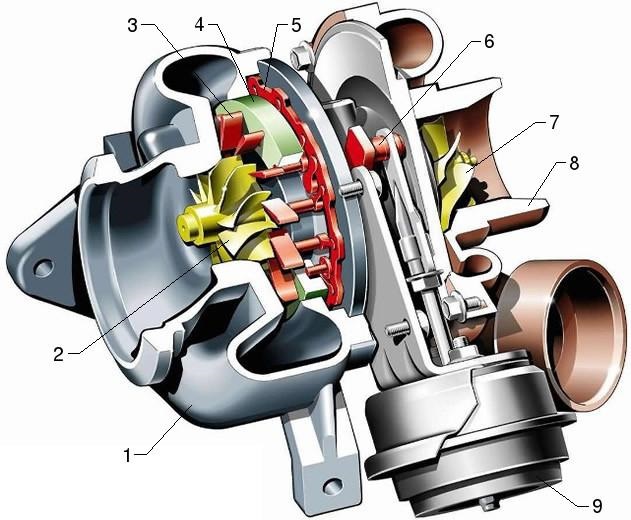
We now know that in a conventional fixed-geometry turbocharger, the shape and effective flow area of the turbine housing are fixed. The turbocharger must therefore operate within the limitations of a design that cannot adapt its internal geometry to suit changing engine conditions.
We also know that a wastegate provides one way of managing excess exhaust energy by allowing some exhaust gas to bypass the turbine. Fuelling strategies can also influence exhaust energy and turbocharger response.
However, neither approach changes the effective flow area through which exhaust gas passes inside the turbine itself.
A VGT takes a different approach. By changing the position of adjustable vanes within the turbine housing, it can alter how exhaust gas is directed onto the turbine wheel and change the effective area available for gas flow.
At low engine speeds, the vanes can restrict the flow area to increase gas velocity and help the turbine accelerate more quickly. As exhaust flow increases with engine speed and load, the vanes can open to provide a greater flow area, allowing the turbine to handle the increased volume of exhaust gas.
The result is a turbocharger that can adapt to a much wider range of operating conditions, improving low-speed response while maintaining the ability to deliver the airflow required at higher engine speeds.
But how can a set of movable vanes achieve this? And what actually changes inside the turbine when those vanes move?
To answer those questions, we first need to understand the operating principles of variable geometry.