
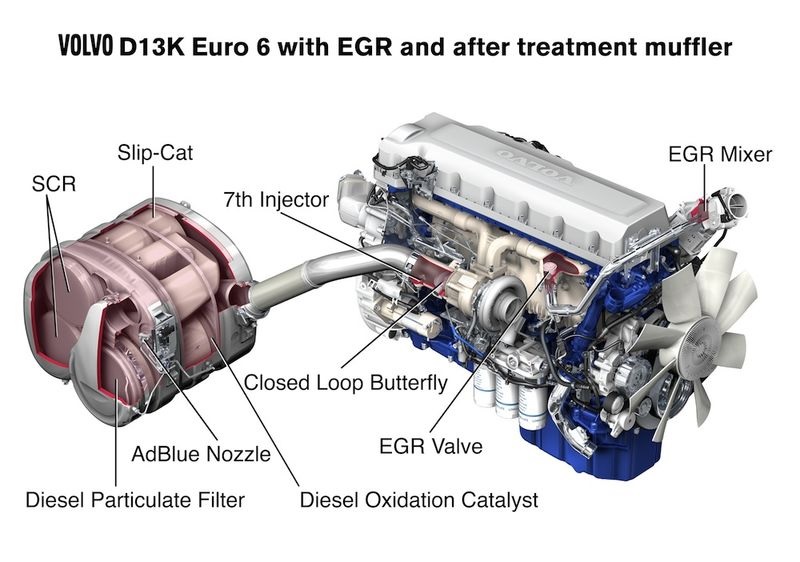
Stage 1 – The Engine
The engine’s only job is to burn diesel efficiently.
Unfortunately combustion creates four unwanted products:
- Carbon monoxide (CO)
- Hydrocarbons (HC)
- Particulate Matter (PM or soot)
- Nitrogen Oxides (NOx)
Those are what Euro regulations are trying to eliminate.
Stage 2 – Air Measurement
Before you can understand emissions you need to understand how the ECU knows how much air entered the engine.
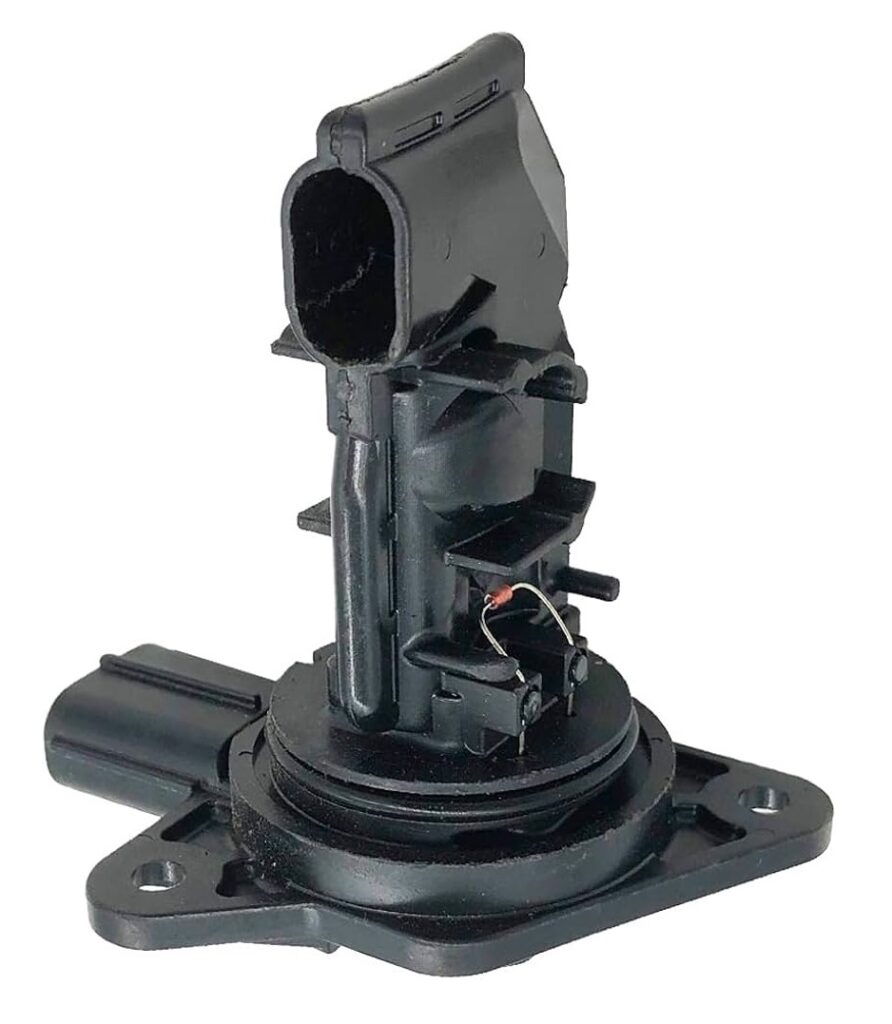
MAF Sensor (Mass Air Flow Sensor)
Also known as the Inlet air pressure / temperature sensor.
Location: Before the turbo, usually on or near the air filter.
Measures: actual mass of air entering the engine.
Usually hot-film or hot-wire.
Outputs: grams/second.
Example:
- Idle = 12 g/s
- Cruise = 45 g/s
- Full load = 180 g/s
The ECU now knows: I have exactly 180 g of air every second.
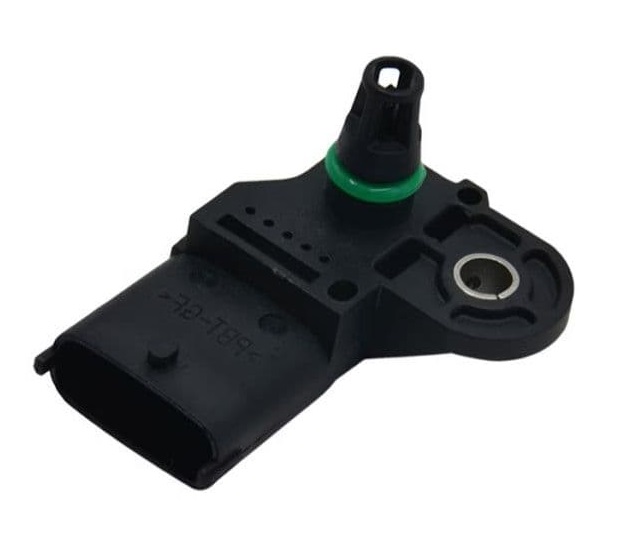
MAP Sensor (Manifold Absolute Pressure Sensor)
Commonly known as the Boost pressure sensor
Location: Intake manifold (Or close by connected by means of a pipe)
Measures: pressure inside the intake manifold.
Outputs: mPa
Normally together with:
- Intake Air Temperature
- sometimes Humidity
MAP tells the ECU: How much boost exists.
It does not measure airflow! Huge difference.
So why have both?
Imagine blowing into a balloon. Pressure can be high. Flow can be low.
Likewise:
Blocked air filter:
- Pressure normal
- Flow reduced
Split intercooler hose:
- Turbo spinning fast
- Pressure low
Flow wrong!
The ECU compares:
MAF vs MAP vs Turbo speed (where fitted) vs EGR position
If they disagree… Fault.
Stage 3 – Combustion
Combustion produces mostly:
- CO₂
- Water
- Nitrogen
Unfortunately also:
- NOx
- Soot
- HC
- CO
Now the after-treatment begins !!!
Stage 4 – DOC
Diesel Oxidation Catalyst.
This is the first catalyst.
Its job:
- Convert CO into CO₂
- Convert HC into CO₂ and water
- Generate heat
That last one is incredibly important…
The DOC is basically the heater for the entire exhaust system.
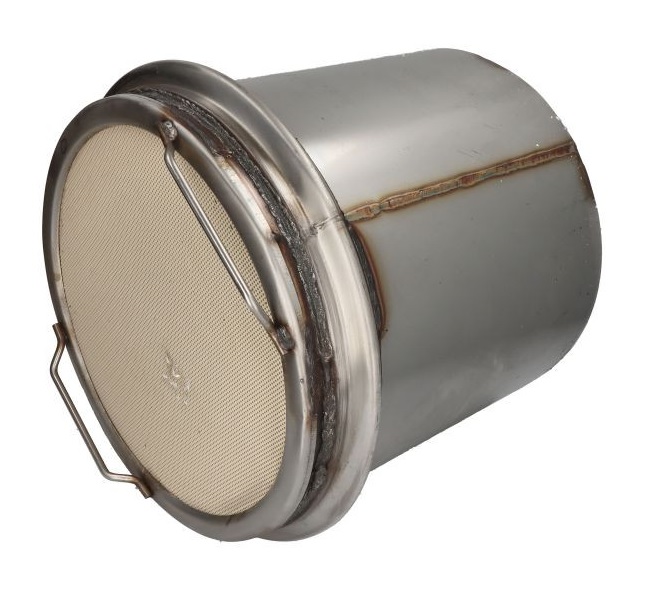
Stage 5 – DPF
Diesel Particulate Filter.
This catches soot. Think of it like a ceramic honeycomb.
- Exhaust enters
- Gas passes through
- Soot cannot
- Eventually it fills up
- Regeneration required
Regeneration
The ECU deliberately raises exhaust temperature,
- Usually 550-650°C
- The soot burns
- Turns into CO₂
- Filter becomes empty again
Well… Mostly… Ash remains and ash never burns. That’s why DPF’s eventually need cleaning.
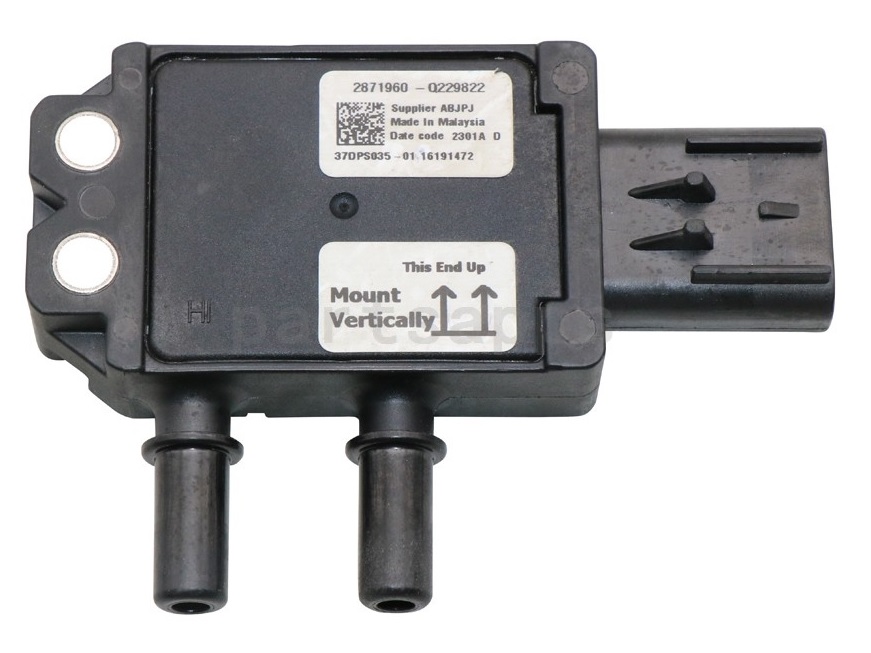
Differential Pressure Sensor
Probably the most misunderstood sensor.
It measures: Pressure before DPF minus Pressure after DPF.
Not pressure…. Pressure difference !
Outputs: mbar
Example:
- Before = 1100 mbar
- After = 1085 mbar
- Difference = 15 mbar
Nice clean filter ✅
Now imagine
- Before = 1450 mbar
- After = 1000 mbar
- Difference = 450 mbar
Restriction ❌
Notice something? It doesn’t know why.
Could be:
- Blocked DPF
- Collapsed substrate
- Blocked pipe
- Blocked SCR
- Crushed exhaust
That’s why live data (“Sensor values monitoring” in Tech Tool) must be interpreted logically.
Stage 6 – SCR
Selective Catalytic Reduction.
Location: Exhaust
This is where AdBlue enters and chemistry gets interesting.
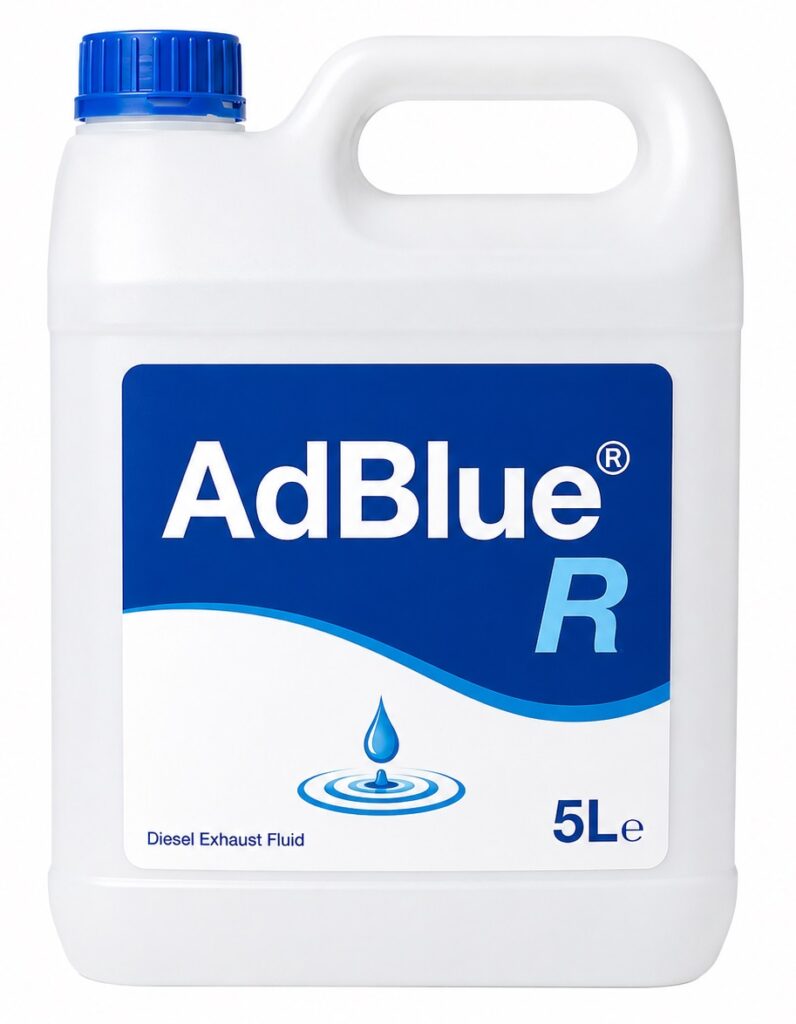
AdBlue is:
- 32.5% High purity urea
- 67.5% Deionised water
Nothing magical.
The dosing injector sprays it into the hot exhaust.
Temperature roughly = 200-450°C.
Now the chemistry begins.
- Water evaporates
- Urea decomposes
- Eventually producing ammonia (NH₃)
Ammonia is the active ingredient, Not AdBlue.
SCR Catalyst
The catalyst mixes
- NO & NO₂
with
- Ammonia.
Result: Nitrogen & Water
Exactly what we wanted ✅
NOx Sensors
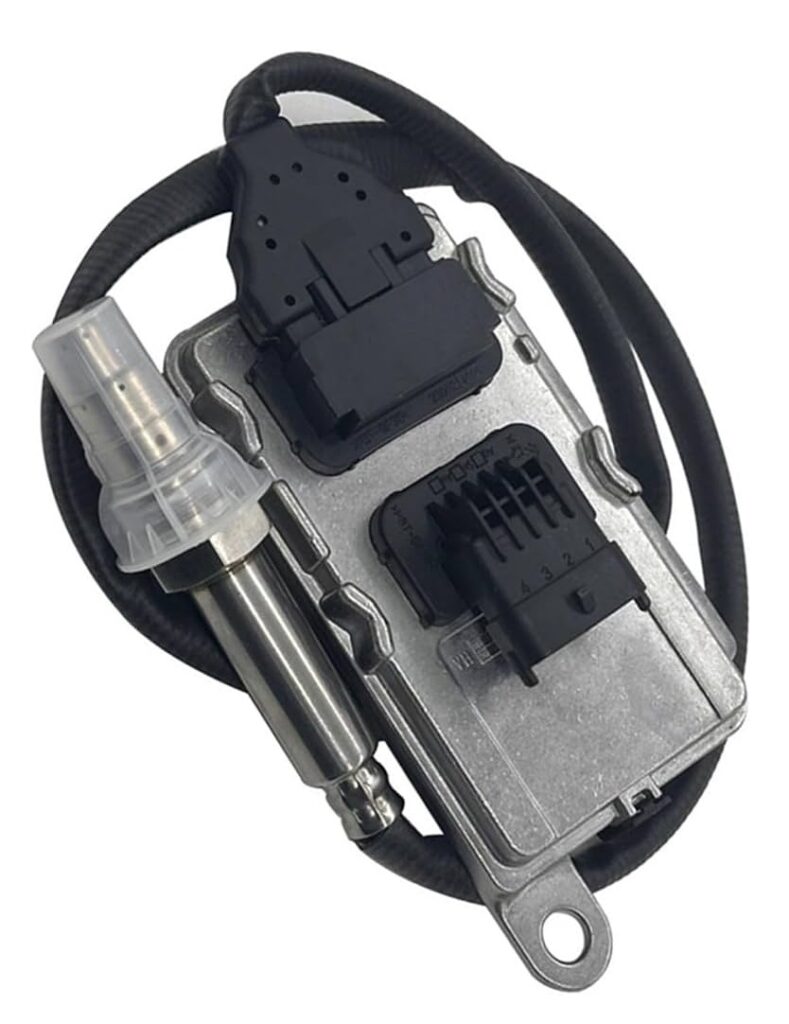
These are amazing sensors. They actually measure NOx concentration.
Location:
- One before SCR
- One after SCR
The ECU compares them.
Example:
- Before = 800 ppm
- After = 20 ppm
- Conversion = 97%
Fantastic ✅
Suppose:
- Before = 800 ppm
- After = 760 ppm
Problem ❌
Could be:
- No AdBlue
- Injector blocked
- Pump failed
- Bad catalyst
- Bad NOx sensor
- Frozen AdBlue
Why Two NOx Sensors?
Without two sensors the ECU has no idea if SCR worked. The first sensor measures the problem, the second measures the result. Exactly like oxygen sensors on petrol engines.
AdBlue Crystals
You might hear terms such as:
- AdBlue crystallization
- Urea crystal deposits
- Urea deposits
- SCR deposits
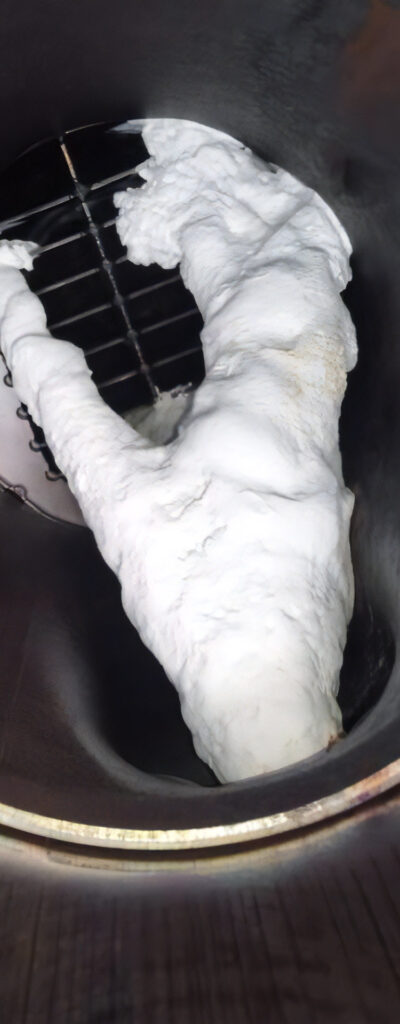
This happens when the injected AdBlue doesn’t fully decompose and dries out, leaving white crystalline deposits.
These deposits are commonly found:
- Around the dosing injector
- Inside the mixing pipe
- At the entrance to the SCR catalyst
Common causes include:
- Low exhaust temperature (lots of short trips or idling)
- Dribbling or leaking dosing injector
- Poor spray pattern from the injector
- Incorrect dosing
- Restricted exhaust flow affecting gas mixing
Over time, these deposits can partially block the exhaust, alter exhaust flow, and eventually trigger NOx efficiency or SCR performance faults.
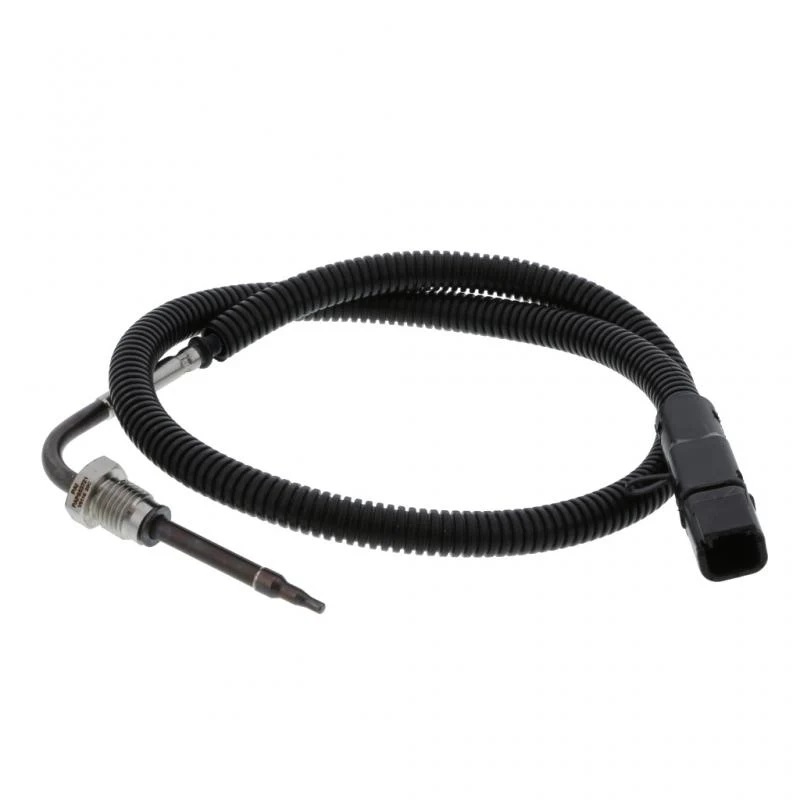
Exhaust Temperature Sensors
Modern systems often have three to six temperature sensors. Why?
Because the ECU must know:
- Is the DOC hot enough?
- Can regeneration start?
- Will AdBlue vaporize correctly?
- Is the SCR operating efficiently?
- Is something overheating?
Temperature drives almost every after-treatment decision.
Oxygen (Lambda) Sensor
Many people are surprised to find a lambda sensor on a diesel. Unlike petrol engines, it’s not primarily controlling a stoichiometric air-fuel ratio.
Instead, it helps the ECU estimate excess oxygen in the exhaust, which can improve:
- EGR control
- Turbo control
- Fuel injection optimization
- Regeneration management
- Overall emissions accuracy
Think of it as another piece of the combustion-efficiency puzzle.
Role of the ECU
The ECU is Solving One Giant Equation.The ECU isn’t looking at individual sensors.
It’s constantly asking:
“Do all of these measurements make physical sense together?”
For example:
- Engine speed = 2,000 rpm
- Fuel injected = 45 mm³/stroke
- MAF = 72 g/s
- MAP = 2.1 bar absolute
- EGR = 18% open
- Turbo vane position = 42%
- DOC temperature = 320°C
- DPF differential pressure = 18 mbar
- Upstream NOx = 700 ppm
- Downstream NOx = 40 ppm
If one value doesn’t fit the overall picture, the ECU starts looking for faults. That’s exactly how an experienced diagnostic specialist thinks.
If you want to know more about aftertreatment systems and how all these components interact with each other, check out my FREE course Understanding Modern Diesel Engine Management here.